Androphobia in Lesbian Identity: Understanding the Connection
Do you feel an unexplained discomfort or even fear around men and wonder if it's connected to your sexual orientation? You are not alone in these complex feelings, and they deserve understanding, not judgment. For many women questioning their identity, the line between androphobia (a fear of men) and lesbianism can feel blurry, raising more questions than answers.
This article is here to help you navigate this sensitive topic. We will explore the differences between trauma responses, personal preferences, and potential signs of your authentic orientation. Our goal is to provide clarity without putting labels on your experience.
Whether you're just starting to question your feelings or have been wrestling with them for years, understanding this connection is a valuable part of self-discovery. If you are looking for a safe and supportive way to explore these feelings further, a tool like our confidential lesbian test can offer helpful insights.
Defining Androphobia: Clinical vs. Cultural Context
Before we can understand its connection to lesbian identity, it's important to clarify what androphobia really means. The term is often used casually, but it has both a clinical definition and a broader cultural context. Separating these can help you better understand your own feelings.
What Is Clinical Androphobia?
From a clinical perspective, androphobia is a specific phobia—an intense, persistent, and irrational fear of men. This goes beyond mere shyness or discomfort. It can trigger severe anxiety, panic attacks, and an urge to avoid men completely.
Like other phobias, clinical androphobia often stems from a traumatic event or a learned response. It is a recognized anxiety disorder that can significantly impact a person's daily life, relationships, and career. Treatment, such as therapy, may be necessary to manage its symptoms. It's crucial to remember that this is a mental health condition, not a reflection of one's sexual orientation.
Cultural Influences on Discomfort with Men
Beyond the clinical definition, many women experience a general discomfort or distrust of men shaped by cultural and societal factors. This is not a phobia but a rational response to lived experiences. In today's world, discussions about patriarchy, toxic masculinity, and gender-based violence are widespread. Because of this, feeling cautious around men can be a natural protective response.
This culturally influenced discomfort differs from an innate fear. It may stem from personal negative experiences, stories from friends, or media portrayals of men. It's a valid response to societal patterns and doesn't necessarily indicate anything about your sexual orientation.
How Society Shapes Our Understanding of Male Relationships
Society often presents heterosexuality as the default. From a young age, girls are often taught to seek male approval and build their lives around relationships with men. This concept, sometimes called "compulsory heterosexuality," can create immense pressure.
For some women, the discomfort with men is a reaction against these societal expectations. It might feel like a resistance to a role you never felt comfortable in. This feeling is less about a fear of men and more about a lack of connection to the heterosexual life path that society prescribes. Recognizing this pressure is an important step in discovering what you truly want for yourself.
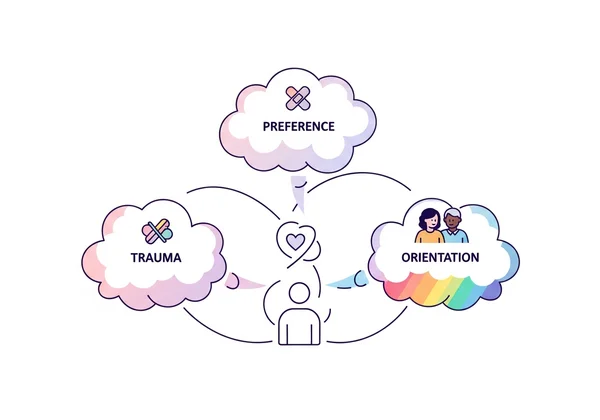
Differentiating Trauma, Preference, and Orientation
Untangling your feelings about men requires looking closely at their roots. Is your discomfort a response to past pain, a simple lack of interest, or part of your sexual identity? These are distinct possibilities, and understanding them can bring you closer to self-acceptance.
Signs Your Discomfort May Stem from Past Trauma
Trauma can deeply affect how you interact with the world, including your feelings towards men. If your discomfort is linked to a specific negative event or a series of them, it may be trauma-related.
Signs that trauma could be a factor include:
- Intense physical reactions (like a racing heart, sweating, or shaking) around men.
- Flashbacks or intrusive memories of a negative event involving a man.
- Actively avoiding situations where men will be present.
- A general sense of hyper-vigilance or feeling unsafe around men, even in safe situations.
If these signs resonate with you, it may be helpful to speak with a mental health professional. Healing from trauma is a separate journey from exploring your sexual orientation, though they can sometimes overlap.
Healthy Preferences vs. Identity Indicators
It is perfectly normal to have preferences. You might prefer the company of women because you find conversations more fulfilling or friendships more emotionally intimate. This doesn't necessarily mean you are a lesbian, nor does it mean you have androphobia. It's simply a social preference.
However, when this preference extends to romantic, emotional, and physical attraction exclusively toward women, it becomes an indicator of your orientation. The key difference is the nature of the attraction. A lesbian is a woman who is attracted to other women. Her identity is defined by whom she is drawn to, not by whom she is not drawn to.
When Androphobia Might Connect to Lesbian Identity
For some lesbians, a general lack of interest in men can be misinterpreted as fear or dislike. If you have never felt romantic or sexual attraction to men, you may naturally feel awkward or disconnected in situations that presume heterosexual interest, like dating or flirting. This discomfort is not a phobia; it is a byproduct of your orientation.
In these cases, the "androphobia" is not about fearing men but about the absence of attraction to them. You may not relate to them as potential partners, which can create a sense of distance. If you find your life, dreams, and desires are consistently centered on women, it's a strong sign that your identity is rooted in being a lesbian. A helpful step can be to explore these feelings in a safe, private space.
Navigating Your Feelings: A Self-Reflection Framework
Self-discovery is a journey, and having a map can help. This framework offers some questions and ideas to guide you as you explore your feelings about men and your own identity. Be patient and kind to yourself throughout this process.
Questions to Explore Your Relationship with Men
Take some time to reflect on these questions without judgment. There are no right or wrong answers; the goal is simply to understand yourself better.
- Do I feel fear, or do I feel a lack of interest?
- Have I ever had a romantic crush on a man? How did it feel compared to any feelings I've had for women?
- When I imagine my ideal future partner, who do I see?
- Does my discomfort with men exist in all situations, or only in romantic or sexual ones?
- Do I enjoy platonic friendships with men?
Answering these honestly for yourself can help clarify whether your feelings are rooted in fear, preference, or orientation.
Assessing Your Emotional and Physical Responses
Pay attention to your body and emotions. When you are around women you are drawn to, how do you feel? You might notice excitement, a sense of warmth, or a "spark."
Now, consider how you feel in romantic situations with men. Do you feel obligated, anxious, or simply neutral? Your authentic emotional and physical responses are powerful sources of information. They often tell a truer story than the one society expects you to live.
Understanding the Fluidity of Sexual Orientation
Remember that sexuality can be fluid. It's okay for your feelings to change over time. Some women identify as lesbians later in life after having relationships with men. Others may find their identity shifts between labels like bisexual and lesbian.
Your journey is unique, and it doesn't have to fit into a neat box. The most important thing is to honor how you feel right now. Allow yourself the grace to explore without needing a permanent label. If you're looking for a structured way to reflect, an online tool can be a great starting point for your personal discovery.
Your Journey of Understanding Continues
Your journey of understanding yourself is uniquely yours, with no right or wrong path. Whether you're beginning to question your feelings or have been exploring for years, these emotions deserve compassion. The connections you make—with yourself and others—will guide you toward a life that feels authentic and true to who you are.
If you're still questioning what your feelings might mean for your sexual orientation, our confidential Lesbian Test can provide additional insights in a safe, supportive environment. Begin your journey of self-discovery today with our confidential lesbian test.
FAQ Section
Is feeling uncomfortable around men always a sign I'm a lesbian?
No, not at all. Discomfort around men can stem from many sources, including past trauma, shyness, social anxiety, or simply a social preference for the company of women. While it can be related to being a lesbian for some, it is not a universal sign.
Can trauma affect how I understand my sexual orientation?
Yes, trauma can complicate the process of understanding your sexuality. A negative experience with a man might cause you to question if your lack of attraction is a trauma response. It's important to address the trauma for your well-being, which can, in turn, provide more clarity about your authentic orientation.
What if I'm attracted to women but don't experience androphobia?
That is completely normal and is the experience for the vast majority of lesbians. Lesbian identity is defined by the attraction to women, not by a fear or dislike of men. Many lesbians have positive, healthy platonic relationships with men.
How can I tell if my discomfort with men is trauma-related or preference?
Trauma-related discomfort often involves intense fear and anxiety that impacts your daily life. A preference is typically a calmer feeling of simply not being interested romantically or sexually. If you suspect trauma, seeking professional help is recommended. To explore your preferences, a tool like our online quiz can be a useful, low-pressure first step.
Is it normal for my feelings about men to change over time?
Yes, it is very normal. Sexuality can be fluid, and your feelings and understanding of them can evolve throughout your life. What you feel today is valid, and it's okay if that changes in the future. The most important thing is to be true to yourself at every stage of your journey.