Difference Between Gay and Queer: Meanings, Overlap, and Labels
The difference between gay and queer is mostly about specificity. Gay usually describes same-gender attraction, while queer is a broader word that can describe a non-straight orientation, a non-cisgender experience, a flexible relationship to labels, or a political and cultural identity. The two words can overlap, but they are not identical, and not everyone who is gay wants to be called queer. If you are sorting through attraction, labels, or a changing sense of self, a private sexuality self-reflection tool can be a gentle companion while you keep the final say over your own identity.
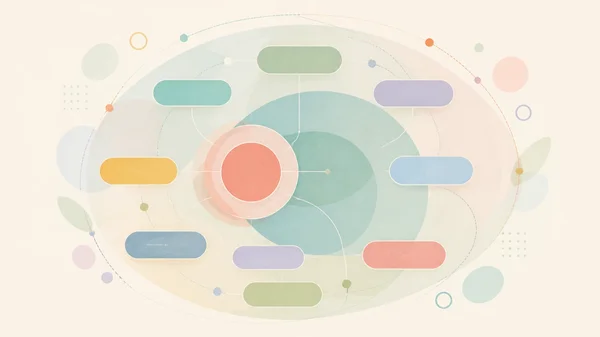
Gay vs Queer in One Clear Distinction
Gay is usually a more specific orientation label. In everyday use, it often means a man who is emotionally, romantically, or sexually attracted to men. Some women also use gay for themselves, especially if lesbian feels too narrow, too public, or simply not like their own word. In a wider community context, gay may also be used as a general shorthand for same-gender attraction.
Queer is broader and less fixed. It may mean someone is lesbian, gay, bisexual, pansexual, asexual, transgender, non-binary, questioning, or otherwise outside straight and cisgender expectations. For some people, queer says, "My identity does not fit neatly into one box." For others, it signals community, politics, resistance to rigid norms, or room to keep exploring.
So the shortest answer is this: gay usually points to who someone is attracted to, while queer can point to attraction, gender, culture, politics, or a deliberately open way of naming the self.
Why Some People Use Gay and Queer Differently
The words carry different histories. Gay became widely used partly because older terms such as "homosexual" can sound clinical or pathologizing. It gave many people a warmer community word for same-gender love and desire.
Queer has a more complicated path. It has been used as an insult, and for many people that history still hurts. At the same time, many LGBTQ+ people have reclaimed queer as a proud, inclusive term. That is why context and consent matter. One person may love being called queer because it feels expansive. Another person may be gay and firmly not queer because the word feels painful, too political, too vague, or simply inaccurate.
This is also why "gay vs queer" can become emotional online. The debate is rarely only about dictionary definitions. It is often about safety, generation, culture, community belonging, and whether a label feels chosen or placed on someone from the outside.
Can You Be Gay and Not Queer?
Yes. You can be gay and not queer. A person may be attracted to the same gender and still prefer gay, lesbian, or another specific label. They may dislike queer because of its history as a slur, because they want a clearer orientation word, or because queer culture and queer theory do not feel personally meaningful to them.
You can also be queer and not gay. A bisexual woman, a pansexual non-binary person, an asexual trans person, or a questioning person might use queer even if gay does not fit. Someone may also use queer because their attraction pattern is real but not easy to summarize quickly.
The important thing is not to rank the labels. Gay is not "less inclusive," and queer is not "more evolved." They simply do different work. A good label should help a person feel more honest, less alone, and more able to describe themselves when they choose to.
Is Queer Gay or Bi?
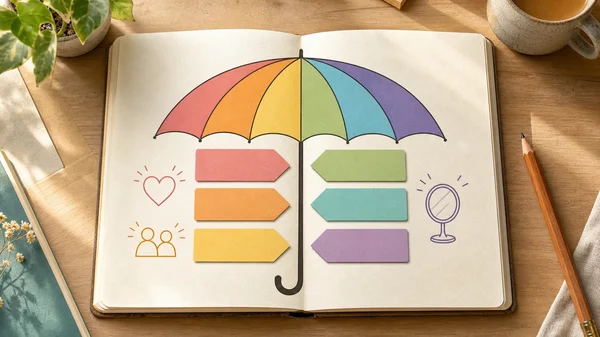
Queer can include gay and bi people, but queer does not automatically mean either one. Think of queer as an umbrella with room under it for many experiences. Gay and bisexual can both sit under that umbrella, but so can pansexual, asexual, transgender, non-binary, questioning, and other identities.
This is where searchers often get tangled. If someone says, "I am queer," they may be telling you they are not straight, not cisgender, not easily categorized, or all of the above. They may not be telling you the exact gender of the people they are attracted to. If you need to know more, the respectful move is not to guess. It is to let them share only what they want to share.
For your own reflection, it can help to separate three questions:
- Who am I attracted to romantically, sexually, or emotionally?
- How do I understand my gender?
- What community words feel comfortable, useful, or safe for me?
Those questions may point to the same label, or they may point to several.
Difference Between Queer, Lesbian, and Gay
Lesbian, gay, and queer can overlap, especially for women and non-binary people who are attracted to women. Lesbian is usually a more specific word for women, and sometimes non-binary people, who are attracted to women. Gay is often used for men attracted to men, but some women use it too. Queer can include lesbian and gay people, but it can also include people whose orientation or gender does not fit those specific labels.
If you are exploring attraction to women, a gentle orientation check-in may help you organize your thoughts without treating the result as a fixed answer. You might notice that lesbian feels right because your attraction is centered on women. You might prefer gay because it feels simpler or more familiar. You might choose queer because it gives you room for gender, fluidity, or uncertainty.
There is no universal hierarchy. Some people use "queer lesbian," "queer gay man," or "gay and queer" because both words describe different parts of their experience. Others use only one label. The best choice is the one that feels accurate enough, kind enough, and safe enough for the moment you are in.
Related Labels People Confuse With Queer
Queer is broad, so it often gets mixed up with other LGBTQ+ terms. These quick distinctions can help.
Pansexual means attraction to people regardless of gender, or attraction where gender is not the main deciding factor. A pansexual person may call themselves queer, but queer does not always mean pansexual.
Bisexual usually means attraction to more than one gender. Some bisexual people use queer as an umbrella word; others prefer bi because it is specific and historically meaningful.
Asexual means experiencing little or no sexual attraction, though asexual people may still have romantic attraction, relationships, or desire for closeness. Some asexual people are queer, while others may not use that word.
Non-binary is a gender identity, not an orientation. A non-binary person may be gay, lesbian, bi, pan, ace, queer, straight, or something else. The difference between queer and non-binary is that queer is often an umbrella across orientation and gender, while non-binary specifically describes a gender experience outside only-man or only-woman categories.
Cisgender means a person's gender aligns with the sex they were assigned at birth. A cisgender person can be straight, gay, lesbian, bi, pan, ace, queer, or questioning. Cisgender does not mean straight; it answers a gender question, not an attraction question.
Can Straight People Say Queer?
It depends on what you mean by "say." In educational writing, a straight person may need to say the word queer when discussing LGBTQ+ terms respectfully. A straight ally may also say "queer community" if that is the wording used by a group, event, or person they are referring to.
But it is different to call another person queer without knowing whether they claim that word. Because queer has been used to harm people, it is better to mirror someone's own label. If someone says they are gay, call them gay. If they say they are queer, queer is likely okay in that context. If you are unsure, use LGBTQ+ or ask what language they prefer.
The same care applies to yourself. If you are straight and cisgender, queer probably is not your identity label. If you are questioning, fluid, trans, non-binary, asexual, or otherwise outside straight/cis expectations, you may be exploring whether queer feels right. You do not have to decide quickly.
How to Choose a Label Without Forcing Certainty
Labels are tools, not contracts. A label can help you find language, community, and self-understanding, but it should not become a cage. If you are deciding between gay, lesbian, queer, bi, pan, ace, questioning, or no label at all, try a slower process.
First, notice what the label helps you explain. Does gay make your attraction feel clearer? Does queer make space for complexity? Does lesbian feel emotionally precise? Does bi or pan describe attraction across genders more honestly?
Second, notice how your body responds. Some labels feel like relief. Others feel tight, performative, or not quite yours. That reaction may change with time, privacy, relationships, safety, or community.
Third, test the label privately before using it publicly. You might write it in a journal, say it out loud alone, imagine telling a trusted friend, or compare how different words feel. You are allowed to use "questioning" while you gather more self-knowledge.
Finally, remember that changing language later does not mean you were wrong before. It may simply mean you learned more.

A Gentle Next Step for Identity Reflection
Understanding the difference between gay and queer can make labels feel less like a test you pass and more like language you can choose. Gay may give you a clear orientation word. Queer may give you room for attraction, gender, community, politics, or uncertainty. Lesbian, bi, pan, ace, cisgender, non-binary, and questioning each answer different parts of the larger identity map.
If you are especially trying to understand attraction to women, you can reflect on attraction privately and use the results as prompts for thought, not as a final verdict. Notice patterns, give yourself time, and let your words serve your life instead of squeezing your life into words.
FAQ
What does being queer mean?
Being queer usually means a person is outside straight and/or cisgender expectations, but the exact meaning depends on the person. It can describe orientation, gender, a broad LGBTQ+ identity, a political stance, or a preference for flexible language.
What is the main difference between gay and queer?
Gay is usually more specific to same-gender attraction. Queer is broader and can include many orientations and gender experiences. A gay person may be queer, but they do not have to use that word.
Can you be gay but not queer?
Yes. Some gay people do not identify as queer because the word feels painful, vague, political, generationally uncomfortable, or simply not accurate for them. Their label should be respected.
Who are queer people attracted to?
There is no single answer. Queer people may be attracted to the same gender, more than one gender, all genders, no gender sexually, or they may be questioning. Queer does not always reveal a specific attraction pattern.
What is the difference between queer and pansexual?
Pansexual is a more specific orientation label that often means attraction regardless of gender. Queer is broader. A pansexual person may also identify as queer, but queer does not automatically mean pansexual.
What is the difference between queer and non-binary?
Non-binary is a gender identity. Queer is often an umbrella term that can include orientation, gender, or both. A non-binary person may be queer, but the words do not mean the same thing.
Can I say queer if I am straight?
You can use the word respectfully in educational or supportive contexts, but avoid labeling another person queer unless they use that word for themselves. If you are straight and cisgender, queer is usually not your identity label.
Is being lesbian, gay, or queer a health condition?
No. Lesbian, gay, and queer identities are not health conditions. If a search result brings up health-related questions, treat those as separate from identity labels and seek qualified support for personal health concerns.