Lesbian Test for Self-Discovery: Your Ultimate Guide to Questioning Sexuality
Welcome. Taking this moment to read these words is a courageous step on a deeply personal journey. If you find yourself typing questions like "am I a lesbian?" into a search bar, you are not alone. This path of lesbian self-discovery can feel confusing, isolating, and exhilarating all at once. Is it normal to question your sexuality? Absolutely. It is a natural part of understanding who you are.
This guide is here to be a supportive companion. We will walk through the feelings, questions, and societal pressures that come with exploring your identity. There are no right or wrong answers here, only your unique experience. To begin exploring your feelings in a safe and private space, you can always start your journey on our homepage.

How to Know If You're a Lesbian: Exploring Your Feelings
Understanding your feelings is the very first step. Society often gives us a very narrow script for love and attraction, but human emotion is far more complex and beautiful. It's about learning to listen to your own heart, separate from outside expectations.
Recognizing Attraction: More Than Just Friendship
One of the most common points of confusion is deciphering the line between intense friendship and romantic attraction. You might wonder if you simply admire a woman or if your feelings run deeper. This is a key area of emotional attraction vs platonic connection.
Platonic love is deep and meaningful, but romantic attraction often has an added layer. It might involve daydreaming about a future together, feeling a magnetic pull to be physically close, or experiencing a specific kind of emotional intensity you don't feel with other friends. It's that flutter in your chest, the desire to know every detail of her life, and the feeling that your world is brighter when she's in it.
Common Signs You Might Be Attracted to Women
While there is no universal checklist, certain patterns can offer clarity. These are not rules but gentle prompts for self-reflection. Exploring the signs you are a lesbian can be a validating experience, helping you connect the dots of your own life.
Consider these questions:
- Do you find yourself more drawn to the emotional and physical presence of women?
- When you imagine your ideal romantic partner, is she a woman?
- Do you feel a sense of belonging or recognition when you see lesbian couples in media or real life?
- Are your most intense emotional bonds and crushes directed toward women?
If these questions resonate, it may be helpful to explore these signs with a tool designed for gentle self-reflection.
Is It Normal to Question Your Sexuality?
Let’s be perfectly clear: it is 100% normal to question your sexuality at any age. Whether you are 15, 25, or 55, your journey is valid. Sexuality can be fluid, and self-awareness grows and changes over time. The act of questioning my sexuality is not a sign of confusion, but a sign of honesty and a desire for authentic living. You are giving yourself permission to be your true self.
Understanding Compulsory Heterosexuality (CompHet)
Sometimes, the biggest barrier to self-understanding isn't our own feelings, but the societal expectations we've absorbed our entire lives. This is where the concept of compulsive heterosexuality, or "CompHet," becomes incredibly insightful. It is a powerful force that can make it difficult for women to recognize their attraction to other women.
What is CompHet and How Does It Manifest?
CompHet is the unspoken societal rule that assumes everyone is, and should be, heterosexual. It's the pressure to date men, get married, and follow a traditional life path. It's so ingrained in our culture that we often don't even notice it's there.
It can manifest as dating men because it feels like what you're "supposed to do," even if the relationships lack a deep spark. It might be convincing yourself a crush on a woman is just "hero worship." It can also be a vague feeling of discomfort or performance in heterosexual relationships, without knowing why. Recognizing CompHet can feel like putting on glasses for the first time—suddenly, parts of your past make sense.
Unlearning Internalized Beliefs and Expectations
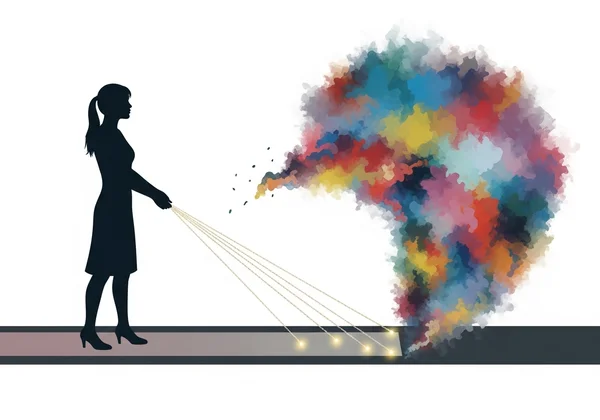
Unlearning these beliefs is a process of gentle self-interrogation. It starts by noticing the "shoulds" in your thoughts. "I should be more excited about this date with a guy." "I should want to get married to a man someday."
Each time you notice a "should," ask yourself: "Who says? And what do I truly want?" This process isn't about blaming anyone; it's about reclaiming your own narrative. It’s about creating space for your authentic feelings to surface, free from the weight of expectation.
Your Next Step: Taking a Supportive Lesbian Self-Discovery Test
Reading and reflecting are powerful tools, but sometimes you need a structured way to process your thoughts. This is where a lesbian self-discovery test can become an invaluable part of your journey. It acts as a private mirror, reflecting your own feelings back to you in an organized way.
How a Confidential Test Can Provide Clarity and Validation
The primary goal of a well-designed test is not to label you, but to provide clarity and validation. In a world that can feel judgmental, a confidential test offers a safe harbor. It allows you to answer honestly without fear of anyone else seeing your responses.
Each question is an opportunity for introspection. Seeing your answers summarized can create "aha" moments, connecting feelings you may not have consciously linked before. This process can be incredibly affirming, confirming that what you feel is real and valid. If you are ready for this step, you can take our test whenever you feel comfortable.
What to Expect from Your Self-Discovery Journey with our platform
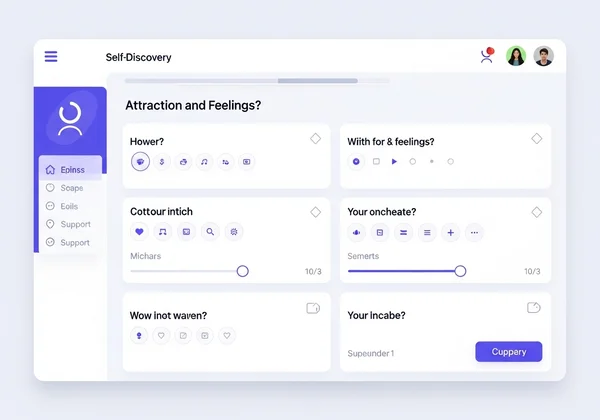
Our platform was built with your privacy and emotional safety as the top priority. When you decide to take the quiz, you can expect a supportive and non-judgmental experience. You will be guided through a series of questions about your attractions, feelings, and preferences.
After completing the questionnaire, you'll receive an initial summary based on your responses. For those seeking deeper insight, we offer an optional, AI-powered analysis that provides a personalized report. This report explores your unique patterns, potential strengths, and gentle suggestions for your path forward, all within a completely anonymous framework.
Beyond Questioning: Embracing Your Lesbian Identity
Self-discovery is not a final destination. It is the beautiful, ongoing process of becoming more fully yourself. Once you move from questioning to a place of greater certainty, a whole new world of experience, community, and love opens up.
Navigating New Relationships and Dating as a Lesbian
Entering the world of lesbian dating can be exciting and new. It’s an opportunity to build relationships based on mutual understanding and shared experience. Be patient and kind to yourself as you learn to navigate flirting, first dates, and building healthy partnerships with women.
Finding Your Community and Building Support Systems
You are not alone. Finding your LGBTQ+ community—whether online or in person—can be life-changing. Surrounding yourself with people who understand and celebrate your identity provides an essential support system. It's a space to share stories, ask for advice, and simply be yourself without explanation.

Coming Out on Your Own Terms: A Personal Choice
The coming out process is entirely yours to control. You decide who you tell, when you tell them, and how you do it. It is not a one-time event but a series of personal choices. The most important thing is your safety and well-being. Move at a pace that feels right for you.
Exploring the Rich Spectrum of Lesbian Identities and Culture
The lesbian identity is not a monolith. It is a rich, diverse, and vibrant culture with a deep history. From butch and femme identities to androgyny and beyond, there are countless ways to express yourself. To understand your identity more deeply is to connect with a legacy of resilient and beautiful women.
Embrace Your Journey: From Questioning to Confidence
Your journey of self-discovery is uniquely yours. The questions you're asking are a testament to your courage and your commitment to living an authentic life. Remember to be patient with yourself, celebrate small moments of clarity, and know that your feelings are valid.
This path from questioning to confidence is a profound one. Wherever you are on that path, you deserve support, resources, and a safe space to explore. If you’re ready to take the next step in understanding your feelings, we invite you to start your self-discovery today. Your journey matters.
Frequently Asked Questions About Lesbian Self-Discovery
Is it normal to question your sexuality at any age?
Yes, it is completely normal. Self-discovery has no age limit. Many women come to understand their sexuality later in life after different life experiences. Your journey is valid regardless of when it begins.
Am I a lesbian or could I be bisexual?
This is a common and important question. Sexuality exists on a spectrum. You might be attracted exclusively to women (lesbian), to more than one gender (bisexual/pansexual), or your feelings might shift over time. The key is to honor your attractions as they are right now, without feeling pressured to fit a specific label.
What does it truly mean to be a lesbian in today's world?
Being a lesbian means you are a woman who is romantically, emotionally, and/or physically attracted to other women. Beyond that definition, it means something unique to each individual. It is about embracing love, building community, and living authentically in a way that feels true to you.
Can I still be a lesbian if I've had relationships with men in the past?
Absolutely. Your past relationships do not invalidate your current identity. Many lesbians have dated men before realizing their true orientation, often due to societal expectations (CompHet). Your identity is defined by your present and future, not your past.
How can this supportive assessment help me find clarity?
Our assessment is a tool for guided self-reflection. It's not here to give you a definitive label, but to help you organize your thoughts and feelings in a private, supportive environment. By answering questions designed with psychological understanding, you can gain insights and validation that can help you find clarity now.