Masc Lesbian Meaning: Identity, Style, Stereotypes, and Soft Masc Explained
If you searched for masc lesbian meaning, you may be trying to decode a label you saw online, describe your own style, or understand where terms like butch, soft masc, femme, and stud overlap. A masc lesbian is usually a lesbian, sapphic woman, or sometimes a nonbinary person connected to lesbian community who expresses themselves in a masculine-of-center way. That can show up through clothes, hair, body language, energy, or the words they choose for themselves. It is not a rulebook, a personality test, or proof of anyone's gender. If you are sorting out what language feels right, private self-reflection tools can support the process without deciding your identity for you.

What Does Masc Mean in a Lesbian Context?
Masc is short for masculine. In lesbian and sapphic spaces, it often describes gender expression rather than sexual orientation itself. A person can be lesbian and masc, bisexual and masc, nonbinary and masc, trans masc and lesbian-connected, or simply masculine-presenting without using masc as a core identity label.
That distinction matters. "Masc" does not automatically mean "man," "boy," "dominant," "emotionless," or "trying to be male." It points to the way someone relates to masculinity: maybe through structured jackets, short hair, sportswear, a lower-key beauty routine, confident body language, or a sense of comfort in masculine-coded presentation. For some people, masc is mostly aesthetic. For others, it is deeply tied to community, attraction, history, and self-recognition.
The phrase masc girl meaning is often searched by people who notice masculine presentation in women or girls and want plain language for it. A masc girl may be a woman or young adult who likes a masculine style, energy, or role, but the label only fits if she wants it. The same applies to masc boy meaning, which can refer to a boy or masculine person, but it is not the same thing as masc lesbian meaning.
Masc Lesbian vs Butch Lesbian: Similar, Not Identical
Butch and masc often overlap, but they are not perfect synonyms. Butch has a long, specific history in lesbian communities. It can describe a masculine-of-center lesbian identity, a style, a social role, a community lineage, and a way of resisting expectations placed on women. Masc is broader and newer in everyday online use. It can describe many people whose presentation leans masculine, including people outside lesbian culture.
An easy way to remember the difference: butch is usually a more specific lesbian community identity, while masc is a broader description of masculine expression. Some butch lesbians are masc. Some masc lesbians are butch. Some people like one word and not the other because of age, culture, local community, or personal history.
There is also a social etiquette point here: avoid assigning "butch" to someone who has not used it for themselves. "Masc" may sound more descriptive, but it is still best to let people name their own identity. If you are talking about someone else, "masculine-presenting" is often safer than turning a label into an assumption.
Soft Masc Lesbian Meaning
Soft masc lesbian meaning usually refers to someone who leans masculine in presentation while also keeping room for softness, fluidity, femininity, or a gentler emotional style. A soft masc person might wear loose denim, button-downs, sneakers, rings, or short hair, but still enjoy makeup, delicate jewelry, warm colors, or a tender romantic energy. The "soft" part does not make the masc part less real. It simply signals that masculinity is not being performed as hardness.
Soft masc can be helpful for people who do not feel fully butch, fully femme, or neatly in the middle. It gives language to a flexible zone: masculine enough to feel recognized, open enough to change day by day. That is why soft masc overlaps with terms like chapstick lesbian, futch, low femme, and androgynous. The overlap is not a problem. Queer language often works like a map with shaded regions, not like a set of locked boxes.
If you are wondering whether soft masc describes you, pay attention to comfort rather than outside approval. Which clothes make you feel more like yourself? Which compliments feel accurate? Do you like being read as masculine, and if so, in what situations? Those questions can be more useful than trying to pass a perfect label exam.
Masc Lesbian Outfits, Hair, and Presentation
Masc lesbian outfits are not one uniform. Common pieces include relaxed jeans, cargo pants, straight-leg trousers, button-down shirts, oversized tees, work jackets, leather or denim layers, suits, vests, boots, loafers, sneakers, caps, chains, watches, and minimal makeup. Hair might be short, faded, cropped, curly, braided, loc'd, undercut, long but styled plainly, or anything else that feels masculine to the person wearing it.
Style is often the easiest part to see, but it is not the whole meaning. A masc lesbian can wear a dress to a wedding, enjoy nail polish, cry easily, dislike sports, or be shy. None of that cancels their masc identity. Masculinity is not a checklist of approved objects; it is a relationship to expression, comfort, and recognition.
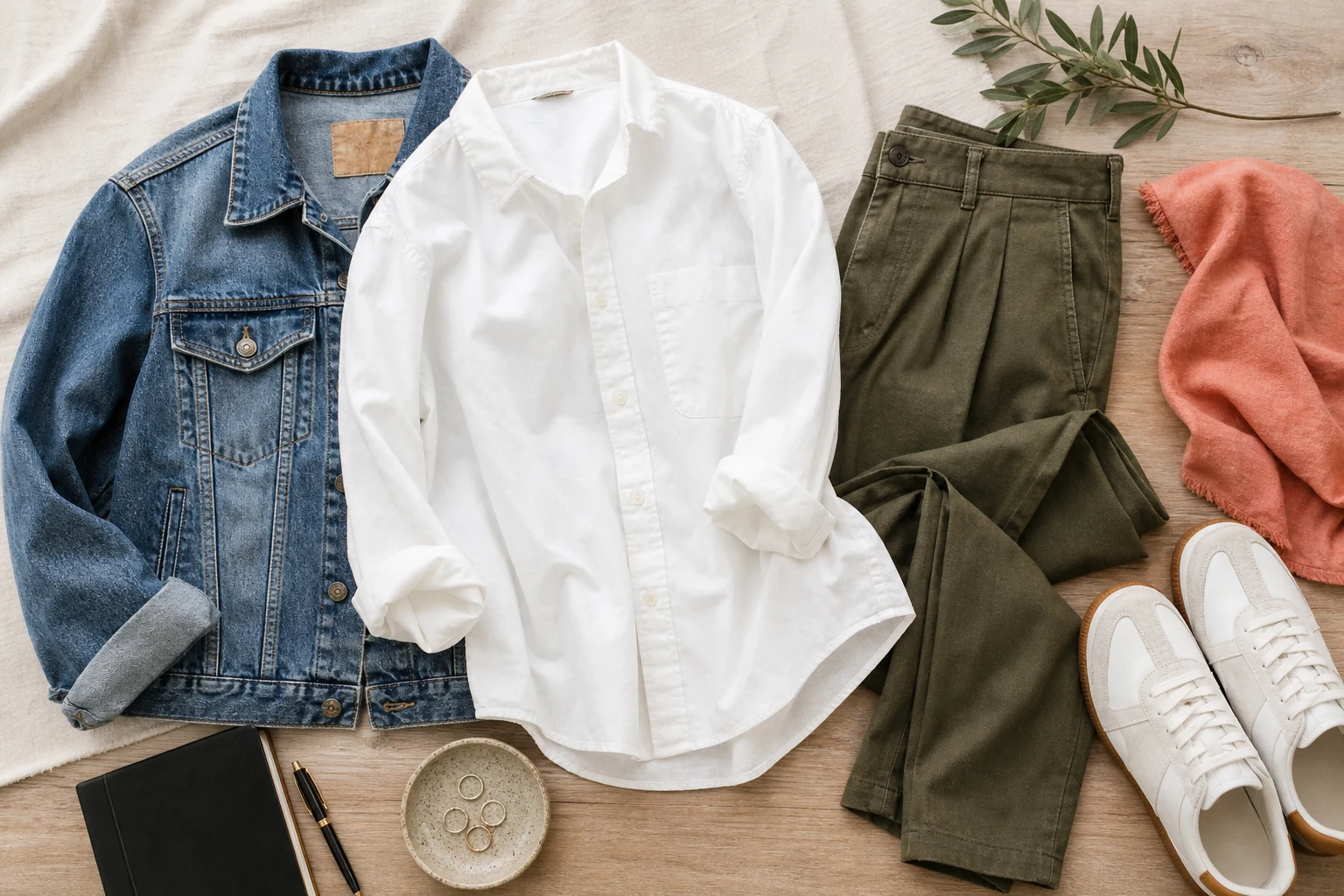
For readers exploring their own presentation, start with low-stakes experiments. Try a different shirt shape, a wider pant leg, a new haircut inspiration board, or a jacket that changes your silhouette. Notice how you feel before you ask what it means. If the experiment brings ease, confidence, or quiet relief, that information matters.
Masc Lesbian Stereotypes to Question
Masc lesbian stereotypes often flatten real people into a narrow script: tough, dominant, unemotional, always protective, always sexually assertive, never feminine, never uncertain. These ideas can be especially stressful for someone who is already questioning their orientation or trying to understand lesbian masc meaning for the first time.
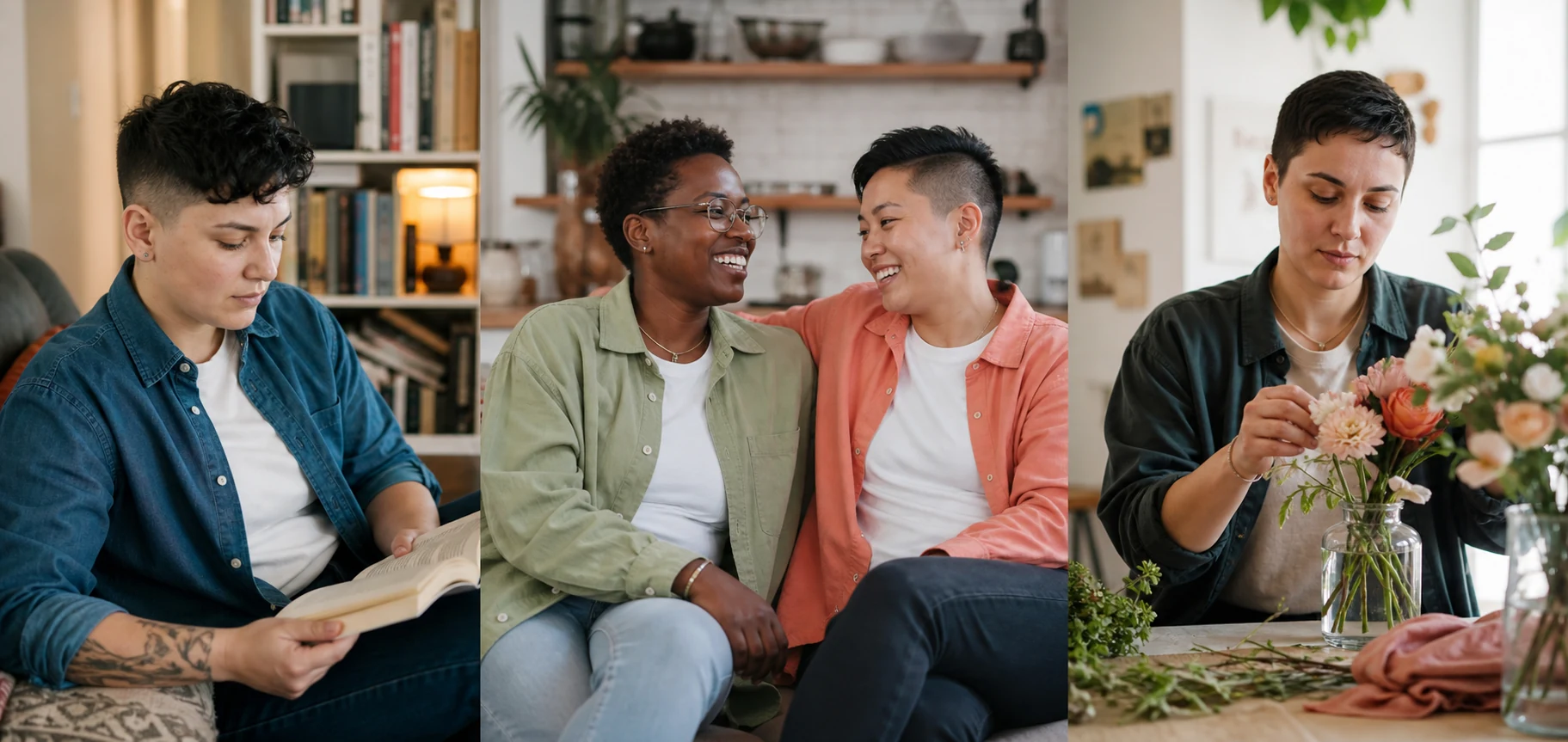
The truth is more spacious. Masc lesbians can be gentle, anxious, playful, academic, outdoorsy, glamorous, quiet, loud, nurturing, awkward, romantic, or independent. Some are tops, bottoms, switches, neither, or uninterested in sexual role labels. Some are confident in public and soft in private. Some use he/him, she/her, they/them, mixed pronouns, or no public pronoun discussion at all. None of these details should be treated as a universal rule.
Stereotypes also intersect with race and culture. For example, stud is a culturally specific term associated with Black masculine lesbians and Black sapphic communities. Stem often describes Black sapphics whose expression blends stud and femme. People outside those cultures should be careful with these words and avoid treating them as general replacements for masc or butch.
Opposite of Masc Lesbian and Femme-Masc Meaning
The opposite of masc lesbian is usually described as femme, feminine-presenting, or feminine-of-center. Femme is not simply "girly" and masc is not simply "boyish." Femme lesbian identity can carry its own history, visibility struggles, and ways of queering femininity. A femme person may look traditionally feminine while still being deeply lesbian, queer, or sapphic.
Femme and masc meaning often becomes clearer when you stop treating them as enemies. They are two broad poles in a much larger field of gender expression. Many people move between them, blend them, or reject the scale entirely. A person can be masc at work, femme at parties, soft masc on dates, and label-free at home. That flexibility is not confusion; it can be part of honest self-expression.
If you are drawn to masc-for-masc language, it usually means attraction between masc people. That can be valid, but it is worth staying mindful that preferences can become exclusionary if they turn into insults toward femme, trans, nonbinary, or gender-nonconforming people. A label should help you communicate desire and community, not rank people.
Masc Lesbian Flag and Related Labels
People often search for masc lesbian flag, but there is not one universally accepted official masc lesbian flag. You may see butch lesbian flags, gender nonconforming flags, lesbian pride flags, or community-made designs used in masc-related posts. These flags can be meaningful in online spaces, but they are not required for belonging.
Related labels include butch, soft butch, soft masc, stud, stem, chapstick lesbian, futch, masculine-of-center, and androgynous. Each term has its own tone and context. Before using a label publicly, it can help to ask three questions: Does it describe my experience? Do I understand its cultural context? Does it feel respectful to the communities that shaped it?
This is especially important for trans masc lesbian meaning. Some transmasculine people also identify with lesbian, sapphic, dyke, or butch communities because those words reflect their attraction, history, community home, or personal sense of self. Others do not. There is no single answer that covers every trans masc person, so the most respectful approach is to listen to how each person describes themselves.
How to Explore Whether Masc Fits You
If masc lesbian meaning feels personally relevant, give yourself permission to explore slowly. You do not need to announce a label before you understand it. You can read, journal, try clothes, follow diverse masc creators, talk with trusted queer friends, or use sexual orientation self-discovery resources to organize your thoughts privately.

Try this reflection exercise:
- List three moments when your presentation felt natural.
- List three words you wish people used for your style or energy.
- Notice whether masc, butch, soft masc, femme, androgynous, or no label feels warm, neutral, or uncomfortable.
- Revisit the list in a few weeks instead of forcing an immediate answer.
If your questioning brings strong distress, isolation, or safety concerns, consider reaching out to a trusted LGBTQ+ support organization, affirming counselor, or local community resource. Educational content can support reflection, but it should not replace personal support when you need care.
Let Masc Be a Starting Point, Not a Box
Masc lesbian meaning is best understood as a flexible language for masculine-of-center lesbian and sapphic expression. It can describe style, energy, community, attraction, and self-recognition, but it should not shrink anyone into a stereotype. You can be masc and soft, masc and unsure, masc and femme-leaning sometimes, masc and trans, masc and private, masc and still learning.
The most useful label is the one that gives you more room to breathe. If masc helps you name something real, you can keep exploring it. If another word feels better later, you are allowed to change. A gentle identity exploration space can offer prompts and reflection, but the final meaning belongs to you.
FAQ
What's the difference between a butch and masc lesbian?
Butch is usually a more specific lesbian community identity with a longer history, while masc is a broader term for masculine expression. Some people use both. Others prefer only one. The best choice depends on personal identity, community context, and comfort.
What is the meaning of masc girl?
A masc girl is usually a girl or woman whose presentation, style, or energy leans masculine. She may or may not be lesbian, bisexual, queer, trans, or nonbinary. The term describes expression, not a fixed orientation.
What is a soft masc lesbian?
A soft masc lesbian is someone who leans masculine but expresses that masculinity with softness, flexibility, or mixed feminine elements. It may show up through relaxed clothing, gentle energy, emotional openness, or a style that feels masculine without feeling hard-edged.
What is another name for a masc lesbian?
Depending on context, related words may include butch, soft butch, masculine-of-center, androgynous, stud, stem, or chapstick lesbian. These are not exact swaps. Some have specific cultural histories, so it is best to use the label a person chooses for themselves.
Is there a masc lesbian flag?
There is no single official masc lesbian flag accepted by everyone. Some people use butch lesbian flags, lesbian pride flags, or community-made masc designs. A flag can be meaningful, but it is not required for your identity to be valid.
Does being masc mean someone is dominant?
No. Masc describes masculine presentation or identity expression. Dominant describes a relational or sexual dynamic, and not all masc people use that role. Confidence, clothing, or body language should never be treated as automatic consent or personality proof.
Can a trans masc person be a lesbian?
Some trans masc people identify as lesbian, sapphic, butch, or dyke because those words reflect their community, attraction, or history. Others do not. The respectful approach is to use the language each person uses for themselves.