Overcoming Self-Doubt After Your Lesbian Test
The journey of self-discovery doesn't end when you get a test result. For many women, taking a lesbian test is a big first step. But what comes after? You might find yourself with a new set of questions and doubts. Why am I suddenly questioning everything I thought I knew? Is this real or just a phase? These thoughts are common and completely normal. They can be confusing and even a little scary.
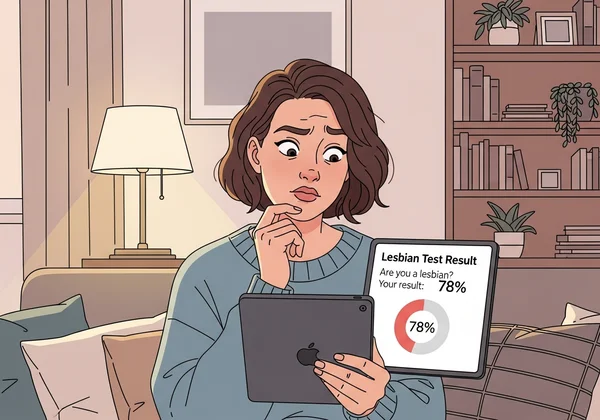
These uncertain feelings often point to internalized homophobia. This term describes when we absorb negative societal messages about being gay, even if we don't personally believe them. This can affect how you see your own feelings and identity. We'll help you spot these patterns and offer simple ways to build genuine self-acceptance. We want to help you turn your test results from a moment of anxiety into a foundation for your authentic life. If you're just starting this journey, our supportive lesbian test is a safe place to begin.
Recognizing Internalized Homophobia: Signs to Watch After Taking a Lesbian Test
After taking a lesbian test, you might expect to feel clear and confident. Instead, you might feel more confused than ever. This is often the work of internalized homophobia, a subtle but powerful force. It’s the quiet voice in your head that echoes society's old prejudices. Recognizing these signs is the first step toward overcoming them. Let’s look at some common ways it can show up.
The Voice of Self-Doubt: Constant Questioning of Your Feelings
One of the most common signs is relentless self-doubt. You might think, "Are my feelings for her real, or am I just lonely?" or "Maybe I'm just admiring her as a friend." This constant questioning can be exhausting. It's like your brain is trying to find any other explanation for your feelings besides the possibility that you might be a lesbian.
This doubt isn't a sign that your feelings are invalid. Instead, it's often a defense mechanism. It's your mind trying to protect you from the challenges you think might come with being different. Remember, the feelings themselves are real. The doubt is the part that has been learned. Acknowledging this can help you separate your true emotions from the fear that surrounds them.
Comparing Yourself to Stereotypes: "Am I Lesbian Enough?"
Another sign of internalized homophobia is measuring yourself against stereotypes. You might look at your life and think, "I don't look like a lesbian," or "I've dated men before, so I can't be a lesbian." This creates an impossible standard of "lesbian enough."
The truth is, there is no single way to be a lesbian. Lesbians are a diverse group of people with different styles, histories, and experiences. Some have short hair, some have long hair. Some have always known they liked women, while others discover it later in life. Your journey is uniquely yours. You don't need to fit into a box to be valid. Your feelings and attractions are what define your orientation, not a checklist of stereotypes.
Fear of Being "Different": Anxiety About Social Acceptance
A deep-seated fear of what others will think is a powerful sign. You might worry about losing friends, disappointing your family, or facing discrimination. This anxiety about social acceptance can make you want to push your feelings down and pretend they don't exist. You might avoid talking about your sexuality or even thinking about it too deeply.

This fear is completely understandable. We live in a world that is still learning to fully accept LGBTQ+ people. However, letting this fear control your life prevents you from being your true self. The goal is to build a life where you feel safe and loved for who you are. This process takes time, and it often starts with finding accepting people and communities. Exploring your feelings safely and anonymously with our lesbian test can be a gentle first step.
Real Stories: Overcoming Self-Doubt After Your Lesbian Test
Hearing from others who have walked a similar path can be incredibly comforting. It reminds you that you are not alone in your feelings of doubt and confusion. Here are a couple of stories, inspired by real experiences, that show how others have navigated their post-test identity journey. These stories demonstrate that overcoming self-doubt is possible.
Maria's Journey: From Test Results to Self-Acceptance
Maria, a 24-year-old, took an online lesbian test after years of feeling "off" in her relationships with men. The results suggested a strong attraction to women, which both thrilled and terrified her. "For a week, I was in denial," she shared. "I thought, 'This can't be right. I've had boyfriends.'" She found herself dissecting every past interaction, trying to prove the test wrong.
Her turning point came when she started journaling. Instead of arguing with her feelings, she just wrote them down without judgment. She wrote about her crush on a female coworker and the comfort she felt watching movies with lesbian characters. Slowly, she began to accept that these feelings were a real part of her. "The test didn't define me," she said, "but it opened a door I was too scared to even look at. It gave me permission to explore, and that exploration led me to self-acceptance."
How Anonymous Testimonials Helped Jenna Navigate Post-Test Identity
Jenna, 19, felt completely isolated after her test results. She didn't know any openly gay people and was afraid to talk to her friends. The question "Am I lesbian enough?" played on a loop in her mind because she loved fashion and makeup, which didn't fit the stereotypes she saw online. She felt like an imposter.
While revisiting the test website one day, she discovered a section with anonymous user stories. These stories helped her see her place in the community and gave her courage to find affirming online spaces. She read about women who had similar fears and interests. One story was from a woman who was a former cheerleader, and another was from a mother of three who realized her identity in her 40s. "Reading those stories was like a weight lifting off my chest," Jenna said. "I realized there were so many different ways to be a lesbian. It wasn't a club with a dress code."
Actionable Steps for Self-Acceptance After Your Lesbian Test
Recognizing doubt is the first step, but taking action is what builds lasting confidence. Building self-acceptance is a practice, not a one-time event. It involves gentle, consistent effort to rewire your thinking and build a supportive environment for yourself. Here are three practical steps you can start taking today.
Reframing Negative Thoughts: Cognitive Behavioral Techniques
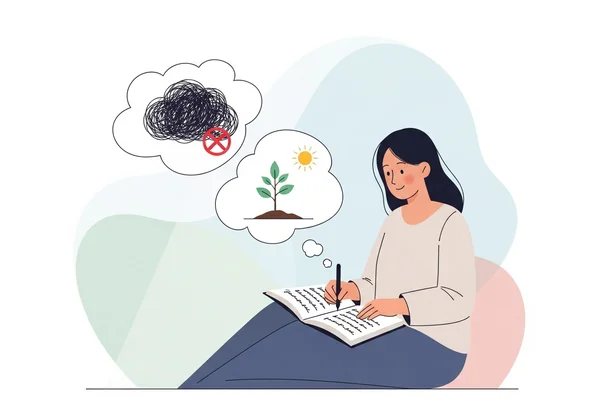
Your brain has likely been trained for years to think in a certain way. Cognitive Behavioral Therapy (CBT) offers simple techniques to challenge and reframe negative thoughts. When a doubtful thought like "This is just a phase" pops up, don't just accept it.
Instead, question it. Ask yourself: "What evidence do I have that this is true? What evidence do I have that it's not?" Then, try to create a more balanced thought, like: "I'm not sure what the future holds, but my feelings for women are real right now, and it's okay to explore them." This isn't about forcing yourself to be positive; it's about being more realistic and compassionate with yourself.
Building Affirming Connections: Finding Your Community
You don't have to go through this journey alone. Finding people who understand and support you is crucial. Your community might not be your current friends or family, and that's okay. Start by looking for online spaces. Reddit has subreddits like r/actuallesbians and r/latebloomerlesbians where you can read stories and connect with others.
You can also look for local LGBTQ+ centers or groups on social media platforms like Meetup. Surrounding yourself with people who affirm your identity helps to counteract the negative messages you may have internalized. These connections provide proof that a happy, fulfilling life as a lesbian is not just possible, but normal.
Celebrating Small Wins in Your Identity Journey
Self-acceptance is built through small, consistent actions. Don't wait for a huge "aha!" moment. Instead, celebrate the little victories along the way. Did you read an article about lesbian history? That's a win. Did you allow yourself to admit you have a crush on a woman, even just to yourself? That's a huge win. Did you take our lesbian test to better understand your feelings? That's an amazing first step.
Acknowledging these small wins helps build momentum. It trains your brain to see progress and reinforces that you are moving in a positive direction. Keep a list of these moments in a journal. When you're feeling doubtful, you can look back at it and see how far you've come.
Your Next Steps in Post-Test Self-Discovery
Your journey doesn't end with recognizing internalized homophobia—it's just the beginning of deeper self-understanding. The lesbian test you took was a starting point, not a final judgment. It’s a tool that opens a door to further exploration. By using the strategies in this article, you're building skills that will support you as you continue to explore your identity.
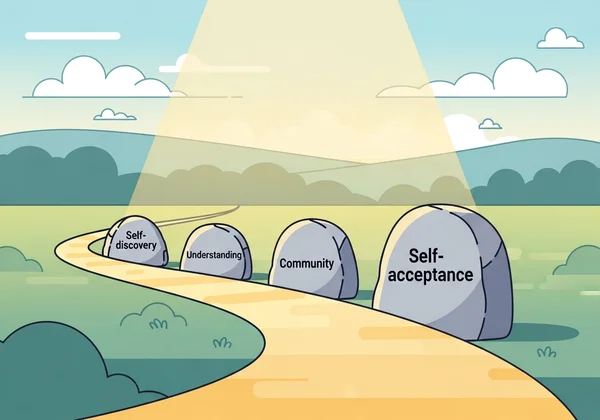
Think of self-acceptance as something you practice daily, not a final destination you reach. It's a path you walk, with new things to learn about yourself at every turn. As you continue to grow, your understanding of who you are will evolve, and that is a beautiful thing. Ready to continue your journey with insights tailored to your unique experience? You can always return to our platform for more resources and tools designed to empower your self-discovery process every step of the way.
FAQ Section
Is it normal to feel doubt after taking a lesbian test?
Yes, it is completely normal. A test can provide clarity, but it can also bring up a lot of new emotions and questions. Doubt is often a part of the process as you adjust to a new way of seeing yourself. Be patient and kind to yourself as you navigate these feelings.
How long does it take to overcome internalized homophobia?
There is no set timeline. For some, it's a relatively quick process, while for others, it takes years of unlearning. The key is to be consistent with your self-acceptance practices, like reframing negative thoughts and connecting with a supportive community. It's a journey, not a race.
Can the lesbian test results be wrong about my attraction?
A test like the one at lesbiantest.org is a tool for self-reflection, not a medical diagnosis. It analyzes your answers to provide insight based on common patterns. Only you can truly know your own sexuality. Think of the results as a helpful guide or a conversation starter with yourself, not a final verdict.
What if my feelings change after I've identified as a lesbian?
Sexuality can be fluid. It's okay if your feelings change or evolve over time. Some people identify as a lesbian for many years and later find they are bisexual, or vice versa. The most important thing is to be honest with yourself about how you feel in the present moment. Your identity is valid, even if it shifts.