Queer vs Gay – Key Differences in Meaning, History, and Identity
You have probably heard the words "queer" and "gay" used side by side — sometimes interchangeably, sometimes not. If you are exploring your own sexual orientation or simply want to understand these terms better, the overlap can feel confusing. The truth is, queer vs gay is not just a vocabulary question. It is a conversation about identity, history, and personal meaning. In this guide, you will learn exactly how each term is defined, where they overlap, and what sets them apart. You will also find a clear comparison table, self-reflection prompts, and answers to the most common questions people ask. If you are curious about your own orientation, you can explore our lesbian self-discovery test as a supportive starting point.
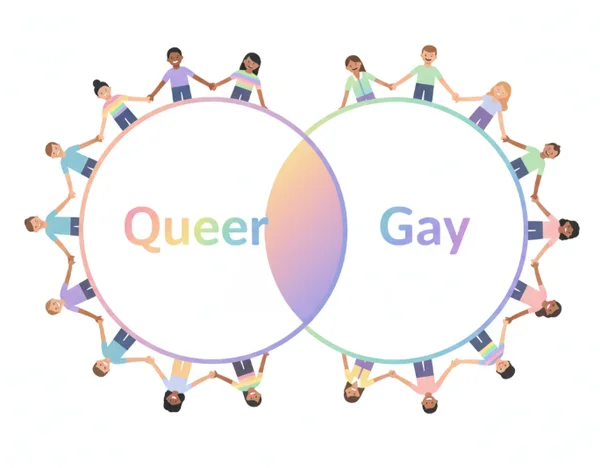
What Does Gay Mean as an Identity Label?
The word "gay" is one of the most widely recognized terms in the LGBTQ+ community. However, its meaning has shifted dramatically over the centuries.
The Historical Shift from "Happy" to "Homosexual"
The word "gay" originally came from the Old French gai, meaning joyful or carefree. For hundreds of years, it carried no sexual meaning at all. By the 17th century, it began to pick up associations with a free-spirited lifestyle. Then, in the early-to-mid 20th century, the word gradually became linked to same-sex attraction. By the 1960s, gay had become the preferred self-description for men attracted to other men — a deliberate choice to replace clinical and often derogatory labels.
How Gay Is Used Today
Today, "gay" primarily describes a person who is sexually or romantically attracted to someone of the same gender. It is most commonly used for men, although some women also identify as gay rather than lesbian. In casual conversation, people sometimes use "gay" as a shorthand for the entire LGBTQ+ community, but this usage can feel exclusionary to those with other identities. The key takeaway: gay refers to a specific sexual orientation — same-sex attraction.
What Does Queer Mean and Why Is It an Umbrella Term?
If "gay" is specific, "queer" is expansive. Understanding the queer definition vs gay starts with recognizing that queer covers a much broader territory.
From Slur to Reclaimed Identity
The word "queer" originally meant "strange" or "unusual." By the late 1800s, it was weaponized as a slur against LGBTQ+ individuals. For decades, it carried deep pain. Then, in the late 1980s and early 1990s, activists deliberately reclaimed the word. Groups like Queer Nation turned it into a badge of defiance and pride. Today, many people — especially younger generations — embrace "queer" as a positive, empowering self-description. However, because of its history, some older community members still find it hurtful. As a general rule, only use "queer" for someone who has chosen that label for themselves.
Who Falls Under the Queer Umbrella?
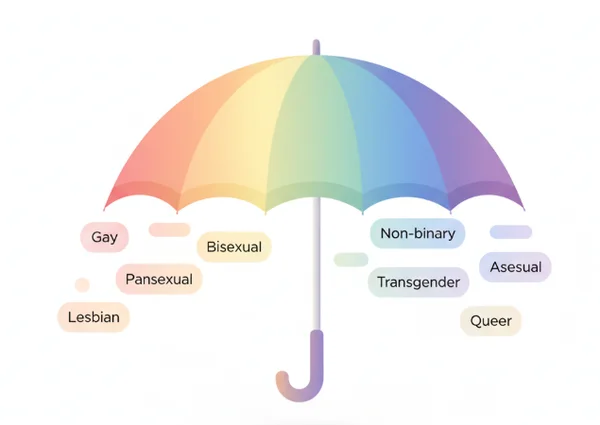
The queer umbrella covers anyone who does not identify as exclusively heterosexual and/or cisgender. This includes gay, lesbian, bisexual, pansexual, asexual, non-binary, transgender, genderqueer, and many other identities. Some people choose "queer" because other labels feel too rigid. Others prefer it because it signals a broader opposition to binary thinking about gender and sexuality. In short, queer functions as an inclusive identity that resists narrow categories.
Queer vs Gay – Core Differences at a Glance
Now that you understand each term individually, let's compare them directly. The gay vs queer meaning distinction comes down to three main areas.
Scope and Specificity
Gay is narrow. It describes same-sex attraction, typically between men (though women sometimes use it, too). Queer is broad. It encompasses the full spectrum of sexual orientations and gender identities that fall outside heterosexual and cisgender norms. Think of it this way: all gay people can be considered queer, but not all queer people are gay.
Political and Cultural Connotations
For many people, "gay" is simply a description of who they are attracted to. It is neutral and specific. "Queer," on the other hand, often carries a political edge. Choosing to identify as queer can signal a rejection of rigid categories, a challenge to social norms, or an alignment with broader movements for justice and inclusion. Therefore, the term someone chooses can reveal something about how they relate to mainstream culture.
Generational and Personal Preferences
Younger people — particularly Gen Z and younger millennials — are more likely to embrace "queer" as their primary identity label. Older generations may prefer "gay" or "lesbian" because those were the terms of empowerment during their formative years. Meanwhile, some community members avoid "queer" entirely because of its painful history as a slur. The right label is always the one each person chooses for themselves.
| Feature | Gay | Queer |
|---|---|---|
| Scope | Same-sex attraction (specific) | Umbrella for all non-heterosexual/non-cisgender identities |
| Gender focus | Often refers to men; sometimes used by women | Not limited by gender |
| Political tone | Neutral, descriptive | Often carries political or activist connotation |
| Historical baggage | Reclaimed from negative usage in mid-20th century | Reclaimed from slur in late 1980s–1990s |
| Generational use | Preferred by many across generations | Especially popular with younger generations |
Queer vs Gay vs Lesbian – How All Three Relate
Many people search for queer vs gay vs lesbian because they want to understand how all three fit together. Here is a clear breakdown.
Where These Labels Overlap
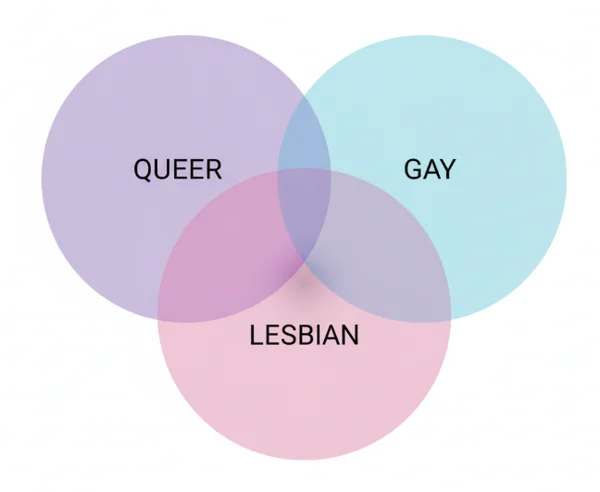
Gay, lesbian, and queer all describe identities within the LGBTQ+ community. "Gay" typically refers to same-sex-attracted men. "Lesbian" specifically describes women attracted to women. "Queer" includes both of these — and extends further to cover bisexual, pansexual, non-binary, and other identities. As a result, a lesbian woman might also identify as queer, but a queer person is not necessarily a lesbian.
Why Some Women Use Queer Instead of Lesbian
Some women feel that "lesbian" is too specific or does not fully capture their experience — especially if they are also attracted to non-binary individuals or feel their sexuality is fluid. For these women, "queer" offers a more flexible and inclusive label. Others prefer "lesbian" precisely because of its specificity and long activist history. Neither choice is more valid than the other. What matters is that the label feels true to the individual.
Can You Be Queer and Not Gay?
Absolutely. Because queer is an umbrella term, it includes identities that have nothing to do with being gay. For example, a bisexual woman, a pansexual man, a non-binary person, or a transgender individual may all identify as queer without being gay. Similarly, someone who feels their attraction is fluid or evolving might choose "queer" because it does not lock them into a fixed category.
In fact, this is one of the biggest reasons people gravitate toward the queer label. It offers room for complexity. If you feel drawn to the LGBTQ+ community but are not sure "gay" or "lesbian" quite fits, queer might be the word that gives your identity space to breathe.
How to Know Which Label Fits You Best
Choosing a label is deeply personal. There is no quiz that can hand you a definitive answer — but there are questions that can help you reflect.
Questions to Ask Yourself
Consider these prompts as a starting point for self-exploration:
- Who do I feel attracted to? Think about emotional, romantic, and physical attraction separately. They do not always point in the same direction.
- Which label feels comfortable when I say it out loud? Sometimes the answer is more about feeling than logic.
- Do I want a specific term, or do I prefer something open-ended? If "gay" or "lesbian" feels right, use it. If you crave flexibility, "queer" might resonate more.
- Am I drawn to a particular community or history? The communities behind each label have their own cultures and stories. Exploring those can guide your choice.
- Do I feel pressure to choose? You do not have to pick one label immediately — or ever. Many people's identities evolve over time.
Why Labels Can Change Over Time
Your identity is not a contract. Many people shift how they describe themselves as they learn more about who they are. Someone might identify as gay in college, then later feel that queer better captures their experience. Others start with "queer" and eventually find a more specific label that feels right. Every step of the journey is valid.
Exploring Your Identity Through Self-Reflection
Understanding the difference between queer and gay is valuable. But the most important step is understanding yourself.
Why Self-Understanding Matters
Exploring your sexual orientation is not about finding the "right" answer on the first try. It is about building a deeper relationship with your own emotions, desires, and sense of self. Whether you ultimately identify as gay, queer, lesbian, bisexual, or something else entirely, the process of self-reflection itself brings clarity and confidence.
A Supportive Tool for Your Journey
If you are a woman exploring your orientation and wondering where you fall on the spectrum, a structured self-reflection exercise can help organize your thoughts. Our lesbian self-discovery test at Lesbiantest.org is designed as an educational, supportive resource — not a diagnosis. It offers thoughtful questions that help you reflect on your feelings and patterns in a safe, anonymous space. You can also receive an optional AI-powered personalized report for deeper insight.
This tool is not a clinical assessment. It is a starting point for self-understanding, not a substitute for professional guidance when needed.
Embracing Your Identity with Confidence
The queer vs gay conversation is ultimately about one thing: giving people the language to describe who they are in a way that feels authentic. "Gay" offers clarity and specificity. "Queer" offers breadth and freedom. Both are powerful. Both are valid.
No matter where you are on your journey, remember these key points:
- Labels are tools for you — use the ones that serve your self-understanding.
- Your identity may shift, and that is completely normal.
- You do not owe anyone an explanation for how you identify.
- Support and resources are available when you need them.
If you want to continue your self-exploration in a safe, private environment, try the Lesbiantest.org self-discovery quiz to reflect on your feelings at your own pace.
Frequently Asked Questions
Is queer a slur or a valid identity?
Historically, "queer" was used as a slur against LGBTQ+ individuals. Since the late 1980s, many activists and community members have reclaimed it as a positive identity label. Today, it is widely accepted — but always respect each person's preference, since some still find the word painful.
What does it mean to identify as queer vs gay?
Identifying as gay typically means you are attracted to people of the same gender. Identifying as queer often means you belong to the broader LGBTQ+ community and may prefer a label that is less rigid or more politically expressive than "gay."
Can someone be both queer and gay?
Yes. Because queer is an umbrella term, a gay person can also identify as queer. Many people use both labels depending on the context — "gay" for specificity and "queer" for broader community identification.
Why do some people prefer queer over gay?
Some people prefer "queer" because it feels more inclusive, flexible, or politically meaningful. It does not lock them into one specific orientation and allows space for fluid or evolving identities. Others simply feel it resonates more personally.
What is the difference between gay, lesbian, and queer?
"Gay" usually refers to men attracted to men. "Lesbian" refers to women attracted to women. "Queer" is an umbrella term that includes both — plus bisexual, pansexual, non-binary, transgender, and other identities outside heterosexual and cisgender norms.
Is queer only about sexual orientation?
No. Queer can also refer to gender identity. Non-binary, genderqueer, and transgender individuals may identify as queer even if their sexual orientation is heterosexual. The term covers both sexual and gender diversity.