Sexual Fluidity: Understanding Your Evolving Lesbian Identity
Have you ever felt confused because your attractions seemed to change over time? One day you feel a strong connection to women, and the next, you might find yourself questioning everything you thought you knew. Are you wondering if your feelings are valid? You are not alone. Many women go through periods of intense questioning where their identity feels like it is shifting or evolving.
This is where the concept of sexual fluidity becomes important. It suggests that for many people, attraction is not a fixed point on a map. Instead, it is a journey that changes as you grow and learn more about yourself. Whether you have already used our lesbian test or are just beginning to think about these topics, understanding fluidity can bring peace to your self-discovery process.
Let's explore what it means to have an evolving identity. We’ll look at the science behind these changes and why it’s perfectly normal for feelings to shift. Let’s unpack practical tools to understand your evolving feelings—on your terms.

What Exactly Is Sexual Fluidity?
Sexual fluidity describes the way sexual attraction can change over time or depending on the situation. Unlike a fixed orientation that stays exactly the same for a lifetime, fluidity allows for movement. For many women, their "lesbian identity" is not a static box but a living part of who they are.
This does not mean that sexual orientation is a "choice" or that it can be forced to change. Instead, it means that as you experience new relationships and personal growth, your internal compass might point in new directions. It is a natural expression of the human experience.
The Science Behind Evolving Attractions
Psychology research shows women’s attractions can be fluid. Dr. Lisa Diamond’s work, for example, finds attraction isn’t a "once and for all" decision. For many, it evolves through life experiences.
Biologically and psychologically, our brains are wired for connection. As we grow, our understanding of what "attraction" feels like can become more refined. What you felt at age 15 might be very different from what you feel at age 25. This evolution is often a sign of a healthy, developing mind that is open to new emotional experiences. Understanding this science helps remove the guilt many feel when their labels no longer seem to fit.
Fluidity vs. Confusion: How to Tell the Difference
A common fear among women is the idea that they are just "confused" or "going through a phase." However, there is a big difference between confusion and fluidity. Confusion usually feels like being stuck or lost. It is often accompanied by a sense of anxiety and a desperate need to find "the right answer" immediately.
Fluidity, on the other hand, is about the flow of feelings. While it can be surprising, it is more about the presence of new feelings rather than the absence of understanding. If you find yourself attracted to different types of people at different times, that is a sign of fluidity. If you feel like you are lying to yourself or others, that might be confusion. Using a lesbian quiz can help you distinguish between these two by providing a structured way to reflect on your actual patterns.
Why Embracing Fluidity Strengthens Your Self-Discovery
Many people think that not having a "perfect" label makes them less authentic. In reality, the opposite is true. When you allow yourself to be fluid, you are being more honest with yourself. You are acknowledging the truth of your feelings rather than forcing them into a pre-made category. This honesty is the foundation of true self-discovery.
Embracing this process allows you to stop fighting against your own heart. When you stop worrying about whether you "count" as a lesbian or if you are "queer enough," you open up a space for genuine joy. This mindset shifts the focus from "finding a label" to "finding yourself."

How Fluidity Reflects Personal Growth
As we move through life, we learn more about our boundaries, our needs, and our desires. This personal growth naturally impacts how we view our sexual identity. For example, a woman might realize that she was only dating men because of compulsive heterosexuality—the social pressure to appear straight. As she grows more confident, she might find her attractions shifting toward women.
This shift isn’t a mistake—it’s progress. It means you’re listening to your authentic self. Every time your identity evolves, it is a signal that you are shedding an old skin that no longer fits. It is a sign that you are brave enough to let your identity keep up with the person you are becoming today.
The Freedom in Not Labeling Yourself Too Soon
There is a lot of pressure in modern society to "come out" and pick a label as soon as possible. While labels can be helpful for finding community, they can also feel like a trap if you pick one before you are ready. Giving yourself permission to exist without a label—or with a temporary one—is incredibly freeing.
Not rushing labels lets your feelings breathe. Explore connections freely—you’re not breaking any rules. This period of exploration is where the most valuable insights are found. If you want to see where you currently stand on the spectrum, you can start your test to gain more clarity without the pressure of a permanent commitment.
Practical Tools for Tracking Your Sexual Identity Journey
If your feelings are changing, it can be very helpful to keep a record of your journey. Tracking your attractions is not about "proving" anything. Instead, it is about noticing patterns. When you see your feelings written down over months or years, the "fluctuations" start to look like a meaningful story of your life.
By using practical tools, you move from a place of passive wondering to active self-study. This empowers you to take control of your narrative and feel more grounded, even when your feelings are in flux.
Reflection Journal Prompts for Attraction Patterns
Journaling is one of the best ways to get in touch with your subconscious mind. To track your evolving identity, try writing in a private journal once a week. Use these specific prompts to help you see the patterns in your attractions:
- When did I feel most "myself" this week in my interactions with others?
- Did I experience a "spark" or an emotional pull toward someone recently? What was that person like?
- How do I feel when I think about my future? Who do I see standing next to me?
- What is one thing I learned about my desires this week that I didn't know before?
- Am I feeling pressure from friends or social media to identify a certain way?
Over time, you will begin to see if your attractions are leaning in a specific direction or if they truly are fluid across the spectrum. This data is precious for your mental well-being.
Using Our Lesbian Test as a Progress Tracker
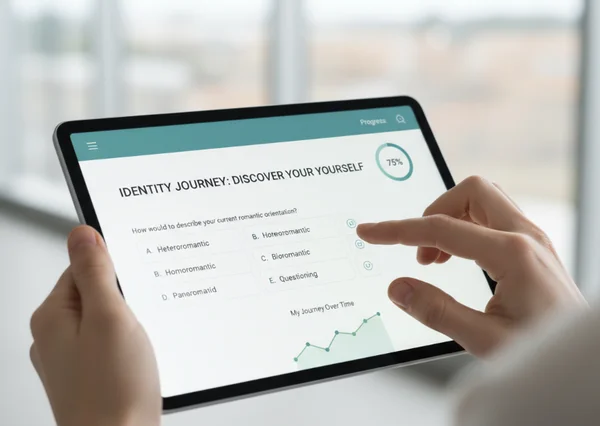
Another excellent tool is to use a structured assessment. Our lesbian sexuality test is designed to be used more than once. Because identity can evolve, taking the test every few months can serve as a "snapshot" of where you are in that moment. It helps you see how your answers change as you become more comfortable with your feelings.
Think of it like a map. You wouldn't use a map from ten years ago to navigate a city that is constantly growing. Similarly, a test result from a year ago might not reflect who you are now. By retaking the test, you can see if your emotional attractions, physical preferences, and self-identifications are shifting. This provides a sense of continuity and helps you realize that even though things change, you are still moving forward.
Your Evolving Journey: Next Steps in Embracing Fluidity
Your sexual identity isn’t fixed—it’s a story you write with every experience. Embracing sexual fluidity means accepting that you are a complex, growing human being. It means understanding that being a lesbian—or however you choose to identify—is a personal experience that doesn't have to look like anyone else's.
Here are a few things to keep in mind as you move forward:
- Fluidity is normal. Science supports the idea that women's attractions can and do change.
- Growth requires space. Not labeling yourself too quickly allows you to find your true path without unnecessary pressure.
- Tracking helps. Using journals and tools allows you to see the beautiful patterns in your own evolution.
You don't have to have all the answers right now. The journey of self-discovery is just as important as the destination. If you are ready to check in with yourself and see where you are today, we invite you to see your results through our confidential and supportive online tool. Let your exploration be a source of strength and empowerment.
Frequently Asked Questions About Sexual Fluidity and Identity
Is it normal for my sexual attractions to change over time?
Yes, it is completely normal. Many women find that their attractions evolve as they gain more life experience, enter new environments, or meet different people. This is often referred to as sexual fluidity. It doesn't mean your past feelings were "fake"; it just means you are growing and changing as a person.
How do I know if I'm experiencing fluidity or just confusion?
Fluidity usually feels like an expansion of your feelings—you are noticing new things about yourself. Confusion often feels like a "knot" in your mind that causes stress or anxiety. If you feel like you are exploring and learning, it is likely fluidity. If you feel stuck and scared of being "wrong," you might be experiencing temporary confusion. Taking a free test can often help clear the mental fog.
Can someone who identifies as lesbian still be sexually fluid?
Absolutely. Many women identify as lesbians because that is where their primary attraction and community lie, but they still acknowledge that they might have experienced fluidity in the past or could in the future. The label "lesbian" belongs to you; you get to decide how it fits your specific life and history.
How often should I retake the lesbian test if I'm exploring fluidity?
There is no set rule, but many users find it helpful to retake the lesbian test every three to six months if they are in an active phase of questioning. This allows enough time for new experiences to happen while still keeping the previous results fresh enough for comparison. It is a great way to track your personal growth and self-understanding.